
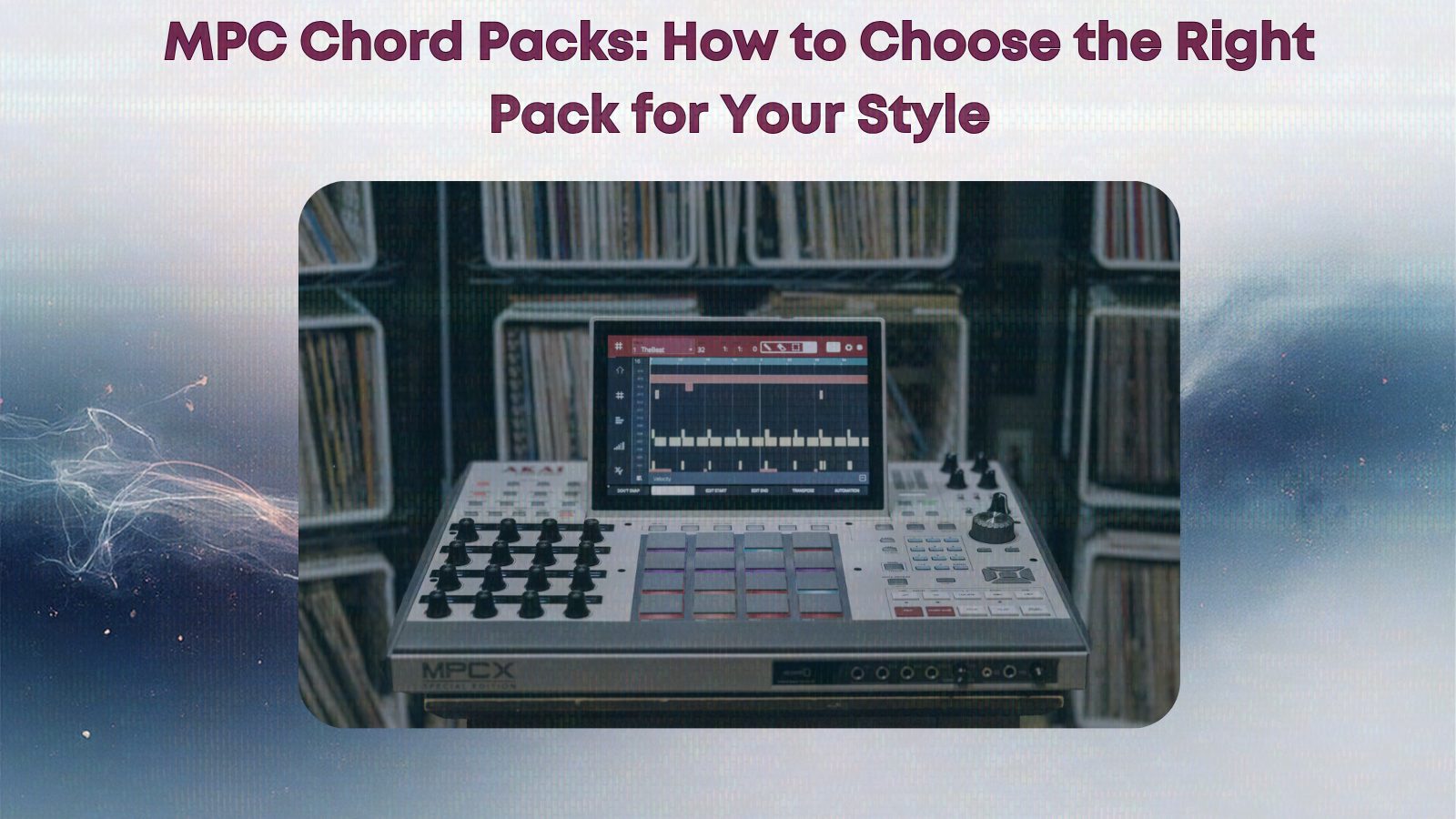
For most hip-hop and lo-fi producers working with an MPC, great harmony often feels out of reach. You’ve got a loop running, drums hitting, but the melodic foundation never quite feels like those golden-era records, soulful beats, or modern trap hits you love. That’s where MPC chord packs come into play. They let you cut through the theory, get inspired instantly, and focus on building tracks that sound authentic to your style, no matter your skill level.
What Sets an MPC Chord Pack Apart?
At LoFi Weekly, we believe a truly useful MPC chord pack is more than a generic MIDI file. Ours are built specifically for Pad Perform mode, acting like a session musician living inside your hardware. Each chord sits on its own pad and every progression is tailored to match the style it says on the tin—boom bap, trap, classic soul, West Coast, or anything in between. This design makes them extremely fast (and friction-free) to use, especially for the Bedroom Beatmaker or the veteran looking to skip the technical prep.
The Producer’s Reality: Where Inspiration Gets Stuck
Producers from all backgrounds face a similar dilemma: you want to make music that feels lived-in and musical, but not everyone has been deep-diving jazz modes or music theory for years. Even with the MPC’s flexibility, translating the chords in your head onto the pads can be frustrating. Does it match the vibe you’re aiming for? Will it sound authentic, or generic?
Let’s break down how to find a pack that not only matches the style you love, but also clears creative roadblocks and sparks fresh ideas session after session.
Defining Your Go-To Sound
We all have reference tracks in mind when we start a new beat. Is your MPC loaded up for dark, dusty boom bap like Griselda or Dilla? Chasing the warm, synthy sunshine of Larry June’s West Coast records? Maybe you’re after the cinematic, minimal tension of modern trap or the lush, multilayered chords of 70s soul. Clarity on your core style is the first step—without it, even the best chord pack is just more files on your drive.
Boom Bap Chord Packs
- Signature vibe: Gritty, dark, and jazz-soaked. Heavy use of minor scales, chromatic passing chords, and 7th/9th voicings.
- Why it works on MPC: Boom bap progressions sound alive with drum breaks and classic swing. These packs are typically 80% minor, favoring unresolved movement that leaves room for chopping, sampling, and improvising. Complex voicings inspired by jazz traditions keep things from sounding flat.
- Recommended: Boom Bap Essentials | MPC & Scaler Chord Progressions delivers 150 dark, jazzy progressions mapped for MPC and Scaler. Expect lots of minor 7ths, interesting 8-chord movements, and a sound that sits right in the pocket for classic or modern boom bap beats.
If you want to dive deeper, our guide on MPC Pad Perform Progressions That Sound Like a Session Musician gives even more context for boom bap techniques on the MPC.
West Coast Inspired Chord Packs
- Signature vibe: Smooth, jazzy, and sun-baked. Balanced mix of major and minor, Lydian touches (the “sunshine sound”) with lots of major 7ths and 9ths for rich, open chords.
- What to look for: Packs referencing West Coast or Larry June, usually prioritize uplifting progressions and movements that “land” instead of feeling unresolved. Chords in these packs often feel light, cinematic, and melodic, especially over medium tempos and bouncy drums.
- Recommended: Check for chord packs named after West Coast or referencing artists known for their signature harmonic language.
Trap-Focused Chord Packs
- Signature vibe: Dark, minimal, and atmospheric. Think 90% minor-scale, lots of 2 or 3-chord progressions, and long sustains perfect for 808-driven tracks.
- Why it matters: The beauty of trap is its space. Sparse voicings give your drums and bass room to dominate. Chord packs for trap should never feel busy—instead, they focus on tension, mood, and cinematic backdrops. Avoid packs loaded with jazzy extensions, as they can crowd out the signature trap feel.
- Recommended:
- Trap Essentials | MPC & Scaler Chord Progressions offers 150 dark, ultra-minimal progressions tailor-made for modern trap, complete with those essential minor voicings that let the 808s shine.
- Trap Essence | MPC & Scaler 2 Chord Progressions is Metro Boomin-inspired, giving you cinematic, atmospheric sequences true to contemporary trap’s DNA.
- Trap Essence II | MPC & Scaler 2 Chord Progressions draws on Zaytoven’s melodic sensibility—great if you want to add a touch of complexity while staying in the trap world.
Soul & Neo-Soul Chord Packs
- Signature vibe: Lush, deeply layered, and emotional. 70s-inspired chords, major 7ths, extended 9ths/11ths, and classic II-V-I motion. Best for anyone channeling D’Angelo, Erykah Badu, or the “Blaxploitation soundtrack” vibe.
- What to look for: Packs referencing soul, neo-soul, or 70s soul explicitly. You want complex voicings, not just triads or simple 7ths. Soul packs often balance major/minor progressions, so you get moody and uplifting in one place.
- Recommended:
- Soul Essentials | MPC & Scaler Chord Progressions offers 150 pro-level progressions inspired by classic soul. Includes all the extended and chromatic movements you need for warm, timeless beats.
- Soulful Seventies | MPC & Scaler 2 Chord Progressions and Soulful Seventies II take you even deeper into the 1970s groove—perfect for producers seeking that “old but new” richness.
Comparing Chord Pack Styles Side-by-Side
| Style | Key/Scale Focus | Typical Voicings | Complexity | Works Best For |
|---|---|---|---|---|
| Boom Bap | 80% Minor | Minor 7ths, 9ths, half-dim | Medium to High | Sample-based, drums-forward hip-hop |
| West Coast | Balanced (Major + Minor) | Maj7, Maj9, Lydian | Medium | Smooth, riffs, cinematic |
| Trap | 90% Minor | Minimal, 2-chord | Low | 808 heavy, space-driven |
| Soul/Neo-Soul | Mix Major/Minor | Maj9, 13ths, II-V-I | High | Lush, emotional, layered |
How to Install Chord Packs on the MPC
Once you’ve chosen a pack, installation should not be an obstacle—it takes less than a minute:
- Create a folder named Progressions at the root of your SD card, SSD, or internal drive on your MPC.
- Download your pack and copy the files into that folder.
- Load up your MPC, and in Pad Perform mode your new progressions will show up instantly. No plugins, custom scales, or extra routing required.
You can sequence pads, layer different progressions, transpose keys, and combine styles as needed. The beauty here is in how fast you can experiment, flip, and iterate. For more detailed tips about integrating chord packs creatively, check out our article How to Make Your Own Custom MPC Chord Progressions: From Inspiration to Pad Perform.
Choosing “Quality” Over “Quanity”
We’ve all been burned by packs boasting 800+ random progressions that sound lifeless or generic. Instead, focus on:
- Packs that are genre-specific and explicitly reference the style or artist you’re channeling.
- Reasonable sizes—between 40 and 150 progressions is the sweet spot for finding something fresh without feeling overwhelmed.
- Chords that feel musical, not robotic. Save time, but make each idea sound intentional and soulful.
Expanding Your Chord Library Over Time
Start with one or two foundation packs that fit your core sound. Add more styles as you explore, try the free packs to experiment risk-free, and don’t discard older progressions. What didn’t click last month might be perfect for your next session.
Five Quick Questions for Choosing the Right Pack
- Do you lean toward dark or uplifting beats? That tells you if Boom Bap/Trap or West Coast/Soul fits you best.
- Do you want complex harmony, or just a vibe to build on? More jazz influences? Go for soul or boom bap. Minimalism? Trap.
- Do you work MPC-only or mix with a DAW? Some packs, like those from LoFi Weekly, include Scaler and MPC formats—super helpful for hybrid workflow.
- Does the pack mention specific artists you love? That’s a clue for authenticity of voicings.
- Are there free packs to try first? Always experiment before committing.
How Chord Packs Shape Your Producer Ear
The best part? Using well-designed chord packs actually accelerates your understanding of harmony. Over time, the qualities of minor, Lydian, or chromatic progressions start to stick. You recognize why a certain four-chord loop feels jazzy or why minimalism makes trap so effective. You’ll gain a default library not only of packs, but also harmonic instincts—helping every other part of your production mature.
Tips for Using Chord Packs Creatively
- Don’t be afraid to stack two progressions (Rhodes and synth, for instance) for richer layers.
- Resample the chords through tape or vinyl emulation for instant texture.
- Transpose progressions up or down for subtle mood changes.
- Chop and rearrange multiple progressions together for unexpected melodies.
Next Steps: From Idea to Finished Track
Once you have steady access to high-quality, genre-focused progressions right in your MPC, making professional-sounding beats becomes a workflow, not just a flash of inspiration. If you want more guidance on harnessing MPC chord progressions in a musical way, don’t miss our post on how to instantly add soulful chords to any beat using MPC Pad Perform mode.
Final Thought (and Where to Go Next)
Producers at every level can benefit from chord packs. Not because they replace creativity, but because they cut out the friction between your taste and your final mix. Harmonies become reliable, flexible tools instead of bottlenecks. Whether you’re deep in boom bap, experimenting with trap, or building orchestral soul layers, the right pack keeps your workflow moving and your sound authentic.
Ready to get started? Explore free and premium MPC & Scaler chord packs at LoFi Weekly. We’re here for producers who want tools that actually sound musical, feel inspiring, and make the MPC a centerpiece for creativity. Dive in, pick your pack, and let’s keep building genuine hip-hop and lo-fi music together.